
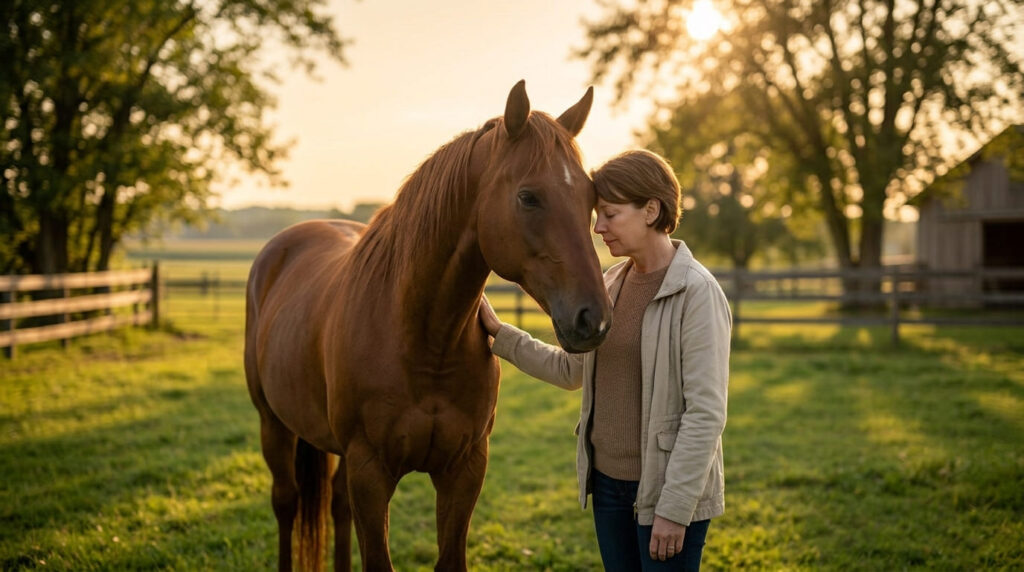
Equine therapy for PTSD uses structured activities with horses to help people practice grounding, emotional awareness, trust, and communication. It may support trauma recovery alongside established treatment, but research on its benefits is still limited.
Some programs include horseback riding, while others focus on ground-based activities such as grooming, leading, and observing horses. These activities help participants notice their emotional reactions, practice setting boundaries, and manage stress in a structured environment. Read on to learn how equine therapy works, what research indicates about its role in PTSD care, and how to evaluate a program’s safety and suitability.
Key Takeaways
- Equine therapy may support emotional awareness and grounding. Guided activities with horses can give participants a chance to practice these skills. Results vary from person to person.
- Research is promising but limited. Equine therapy may complement established PTSD treatments, such as cognitive processing therapy (CPT), prolonged exposure (PE), and eye movement desensitization and reprocessing (EMDR). It should not replace them.
- Safety and guidance matter. Ask about staff training, program goals, costs, and how the activities fit with your current care.
What Is Equine Therapy?
Equine therapy uses structured activities with horses to support emotional, behavioral, or mental-health goals. Depending on the program, trained equine staff may guide these activities as part of a broader care plan.
Most groundwork-based programs do not require riding. Participants may groom or lead a horse, observe its behavior, or practice setting boundaries. These activities can help people notice physical reactions, improve communication, and recognize responses to stress.
The term equine therapy encompasses several approaches, including equine-assisted psychotherapy, equine-assisted learning, and therapeutic riding, each serving a distinct purpose. Individuals seeking PTSD support should confirm whether a program integrates clinical mental health care or provides activities alongside external treatment.
| Approach | Main focus | Is riding required? |
| Equine-assisted psychotherapy | Mental-health treatment involving horses | Not necessarily |
| Equine-assisted learning | Personal development and communication | Not necessarily |
| Therapeutic riding | Riding activities for therapeutic, educational, or physical goals | Usually |
| Informal horse activities | Recreation or general interaction | Depends on the activity |
Program structures vary by provider. It is important to ask what activities are offered, who supervises them, and whether a licensed mental health professional delivers clinical care. For an example of a ground-based program, explore the equine therapy offerings at Compass Integrative Recovery through its Faithful Hearts program.
Equine-assisted activities do not diagnose or treat PTSD on their own. Their potential therapeutic value relies on skilled clinical guidance and how effectively these activities reinforce practical coping skills.
How Equine Therapy Helps PTSD
Equine-assisted activities provide experiential opportunities to practice nervous system regulation, communication, and emotional grounding in real time. Because horses are prey animals, they are acutely attuned to body language, spatial boundaries, and tension. Interacting with them offers an external point of reflection for personal regulation.
Key areas of practice include:
- Body awareness: Participants learn to identify subtle physiological stress responses, such as shallow respiration, clenched muscles, or elevated heart rates, before emotional overwhelm escalates.
- Calming the body: Somatic grounding techniques and rhythmic breathing practiced alongside calm animals help down-regulate an overactive fight-or-flight nervous system.
- Rebuilding trust: Working through collaborative, non-coercive groundwork fosters patience, mutual safety, and healthy relational boundaries after trauma.
- Processing trauma without words: Trauma often bypasses verbal articulation. Experiential interaction allows individuals to explore emotional vulnerability, hypervigilance, and safety through direct somatic experience rather than reliving narrative trauma details verbally.
These activities can be especially beneficial for individuals who respond well to hands-on support alongside conventional psychotherapy. However, outcomes vary, and equine therapy is not considered a primary standalone treatment for PTSD.
What a Session Looks Like
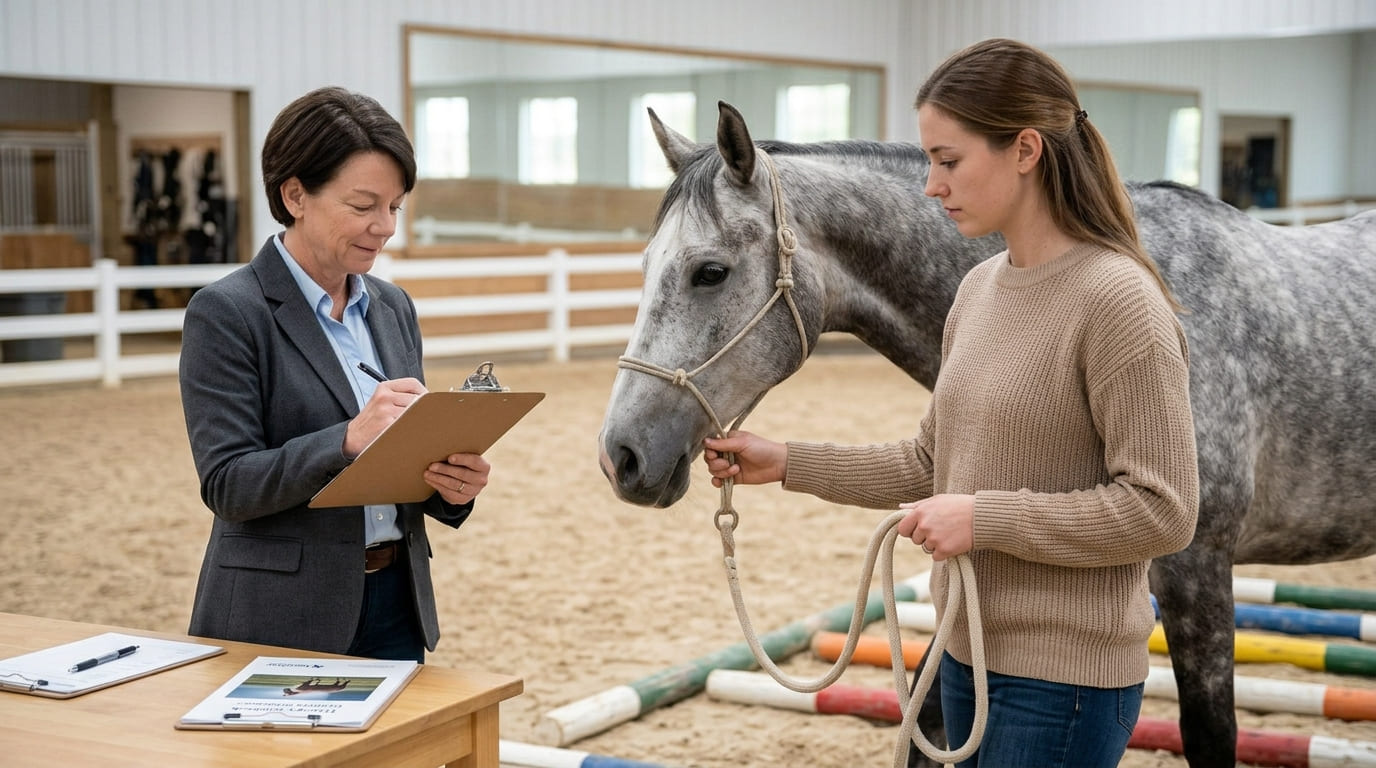
An equine-assisted session typically combines somatic preparation, targeted interaction with the horse, and clinical debriefing. Although session formats adapt to individual treatment plans, a standard groundwork session follows five structured steps:
- Check-in and goal setting: The clinical facilitator checks in on the participant’s current emotional state, identifies potential triggers, and establishes a clear emotional or behavioral focus for the day.
- Somatic grounding: Before approaching the animal, the participant engages in regulated breathing and sensory awareness exercises to anchor their nervous system in the present moment.
- Guided groundwork activity: Under clinician guidance, the participant executes an intentional non-riding exercise, such as grooming, haltering, navigating obstacles, or simply observing herd dynamics.
- Observing physiological reactions: The facilitator prompts the participant to notice internal sensations, emotional shifts, or boundary challenges that arose during the interaction.
- Reflection and clinical debrief: The participant and therapist process the experience, connecting lessons learned from the horse’s responses to daily coping strategies and core trauma treatment goals.
This structure serves as an illustrative framework rather than a standardized treatment protocol. Clinical studies utilize varied activities and timelines, and there is no universal session duration or frequency that guarantees clinical improvement.
A trauma-informed program always prioritizes participant autonomy, respecting the decision to pause or discontinue an activity at any time. If an exercise triggers hyperarousal, flashbacks, or severe distress, safety protocols take immediate precedence to support the participant without pressure.
What the Research Says

Research on equine-assisted interventions for PTSD is promising but preliminary. A 2023 systematic review published in PubMed evaluating interventions for military veterans noted:
“Several of the 10 studies reviewed reported improvements in PTSD symptoms or other psychological outcomes.” – PubMed.
While clinical trials indicate positive trends in reducing symptom severity, researchers emphasize that existing studies often rely on small sample sizes, heterogeneous methodologies, and limited long-term follow-up data.
However, researchers emphasize that existing trials frequently involve small participant sample sizes, diverse intervention methodologies, and an absence of long-term follow-up data. Consequently, medical organizations view equine therapy as an adjunctive, complementary tool that should support, rather than replace, established trauma-focused psychotherapies.
Equine Therapy for Trauma and Addiction
Equine therapy for trauma provides structured opportunities to practice emotional regulation, grounding, and interpersonal boundary setting. Symptoms of PTSD—such as intrusive memories, hypervigilance, and emotional numbing—can make traditional clinical work challenging. Guided horse-assisted activities offer practical, experiential avenues for developing resilience alongside primary mental health care.
PTSD and substance use disorders frequently co-occur. Individuals may turn to substances to manage distressing trauma memories, acute anxiety, or severe sleep disturbances. While this may offer temporary relief, it often complicates recovery, impairs daily functioning, and creates additional health risks.
Ground-based equine activities offer valuable experiential practice for stress management and self-awareness, but they do not serve as a primary treatment for substance use. Individuals facing co-occurring trauma and addiction require integrated, dual-diagnosis clinical care to address both conditions simultaneously.
Established trauma-focused psychotherapies include prolonged exposure (PE), cognitive processing therapy (CPT), and eye movement desensitization and reprocessing (EMDR). According to the U.S. Department of Veterans Affairs National Center for PTSD,
“These are among the psychotherapies used in evidence-based PTSD care.” – U.S. Department of Veterans Affairs National Center for PTSD.
Depending on clinical assessment, an integrated treatment plan may incorporate evidence-based trauma therapy, specialized addiction counseling, medical supervision, and comprehensive peer recovery support.
Learn more about trauma and PTSD treatment options at Compass. A licensed mental health professional can help tailor an approach aligned with your specific symptoms and recovery goals.
Is Equine Therapy Right for You?

Equine-assisted activities offer experiential, body-centered support for individuals seeking non-verbal modalities alongside conventional talk therapy. It may be an appropriate adjunctive approach if you:
- Seek somatic, non-verbal methods to practice emotional grounding and nervous system regulation.
- Prefer hands-on, experiential exercises to complement traditional outpatient psychotherapy.
- Struggle with interpersonal trust, boundaries, and assertiveness following traumatic experiences.
- Want structured, clinician-supervised support within a supportive outdoor setting.
However, equine activities may not be suitable for individuals with severe horse phobias, active psychosis, unmanaged physical instability, or acute medical conditions. Every clinical treatment plan balances evidence-based interventions with supportive therapies and services customized to personal needs and comfort levels.
Equine Therapy at Compass Integrative Recovery
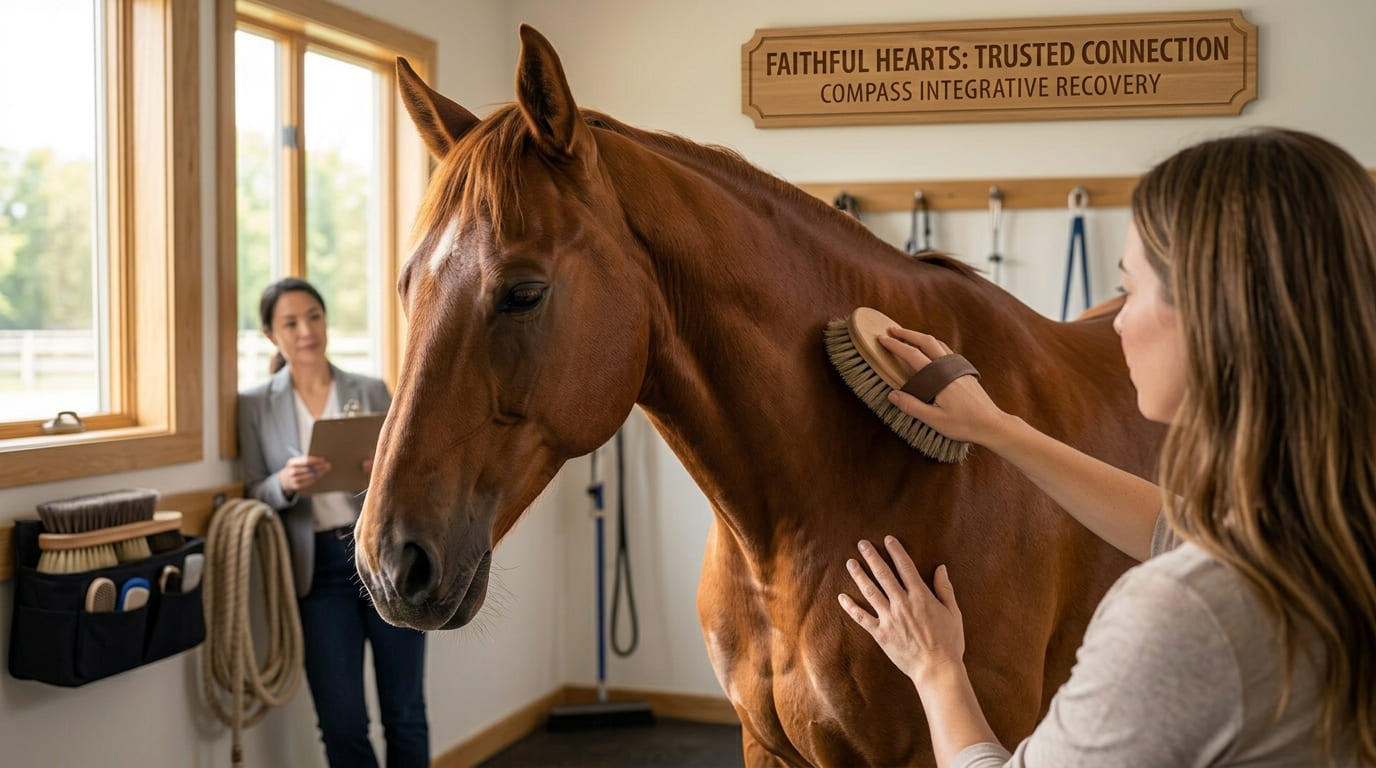
Compass Integrative Recovery offers ground-based equine activities through its Faithful Hearts program, providing participants with experiential trauma-support tools that require no horseback riding or prior equestrian experience. These activities are integrated into comprehensive outpatient treatment plans alongside individual psychotherapy, group counseling, and psychiatric care.
If you or a loved one are navigating trauma recovery or co-occurring mental health conditions, our clinical admissions team can help evaluate whether experiential modalities fit your treatment strategy. Visit Compass Integrative Recovery to explore our evidence-based care programs, verify insurance coverage, and schedule a confidential clinical assessment.
Considering Equine Therapy for PTSD
Equine therapy provides valuable opportunities to practice somatic grounding, emotional regulation, and non-verbal communication. While current scientific literature emphasizes its role as an adjunctive service rather than a standalone cure, it can meaningfully enhance comprehensive PTSD care.
Compass Integrative Recovery incorporates ground-based equine activities through the Faithful Hearts program. Visit Compass Integrative Recovery to learn more about our treatment offerings and contact our clinical team to discuss if this approach is right for you.
FAQs
Do you ride horses in equine therapy?
No, riding is typically not required. Most trauma-informed equine programs focus exclusively on ground-based interactions, including grooming, haltering, leading, and observing horse behavior. These groundwork exercises allow participants to practice mindfulness, boundary-setting, and emotional awareness safely on foot. Compass Integrative Recovery’s Faithful Hearts program utilizes ground-based activities, ensuring participants can participate comfortably without ever mounting a horse.
Does equine therapy work for PTSD?
Clinical research suggests that equine-assisted interventions can help reduce trauma symptoms, ease hyperarousal, and improve emotional regulation. However, large-scale empirical evidence remains preliminary. Equine therapy is not a standalone treatment or cure; it operates best as a complementary modality alongside established trauma-focused psychotherapies such as CPT, PE, or EMDR.
Do I need experience with horses?
No prior horse-handling or riding experience is necessary. Qualified equine specialists and clinicians provide comprehensive safety orientations and step-by-step support during every session. If you experience fear around large animals or have past animal-related trauma, inform the care team in advance so activities can be appropriately paced to ensure comfort and safety.
Is equine therapy covered by insurance?
Coverage varies widely based on individual insurance policies and billing structures. When equine therapy is integrated into a licensed psychotherapy program and delivered by credentialed mental health professionals, portions of the clinical care may be eligible for coverage. Purely recreational, non-clinical horsemanship activities are typically excluded. Contact Compass Integrative Recovery and your insurance provider to review benefits and verify coverage options.