

A mental health retreat can help reduce stress and improve emotional well-being, but it is not a substitute for professional treatment when symptoms persist or disrupt daily life. While wellness retreats focus on rest, stress relief, and healthy routines, clinical residential mental health treatment programs provide comprehensive care for mental health conditions.
The right option depends on what a person is experiencing and the support they need. Read on to compare both options and learn how Compass IR can help you explore the right path forward.
Key Takeaways
- Therapeutic retreats support stress relief and healthy habits.
- Mental health treatment provides professional clinical care.
- Insurance may cover treatment, but not wellness retreats.
What Is a Mental Health Retreat?
A mental health or addiction recovery retreat is a short-term stay away from your normal routine, designed to foster rest and support emotional health. Although it offers a break from daily responsibilities, a retreat typically follows a schedule focused on relaxation, reflection, and healthy habits. However, calling a facility a retreat does not mean doctors are on staff or that it is licensed to treat clinical mental illnesses. Services, staff qualifications, and clinical capabilities vary significantly.
A therapeutic retreat may combine relaxation, mindfulness, and structured wellness activities to support overall emotional well-being. However, the term does not automatically signify that a program provides clinical treatment. Before enrolling, review the services offered, check staff qualifications, and confirm whether licensed mental health professionals are available on-site.
Typical activities offered at wellness retreats include:
- Mindfulness and meditation: Practicing guided breathing and awareness exercises to regulate stress.
- Yoga and gentle movement: Engaging in physical movement and stretching to release tension.
- Counseling or group talks: Facilitated non-clinical discussions led by wellness coaches or visiting counselors.
- Nutritional and sleep support: Providing balanced, regular meals and quiet rest environments.
- Nature and quiet time: Journaling, solitary walks, and outdoor reflection away from digital devices.
- Aftercare planning: Offering lifestyle recommendations, self-care routines, or support group referrals for returning home.
Research published in a journal indexed by PubMed suggests that:
“Meditation retreats can reduce stress, anxiety, and depression while enhancing emotional resilience, but the study also notes that these benefits vary due to ‘heterogeneity in retreat formats’ and ‘limited follow-up,’ making it difficult to evaluate long-term sustainability.” – PubMed
What Is a Mental Health Treatment Program?
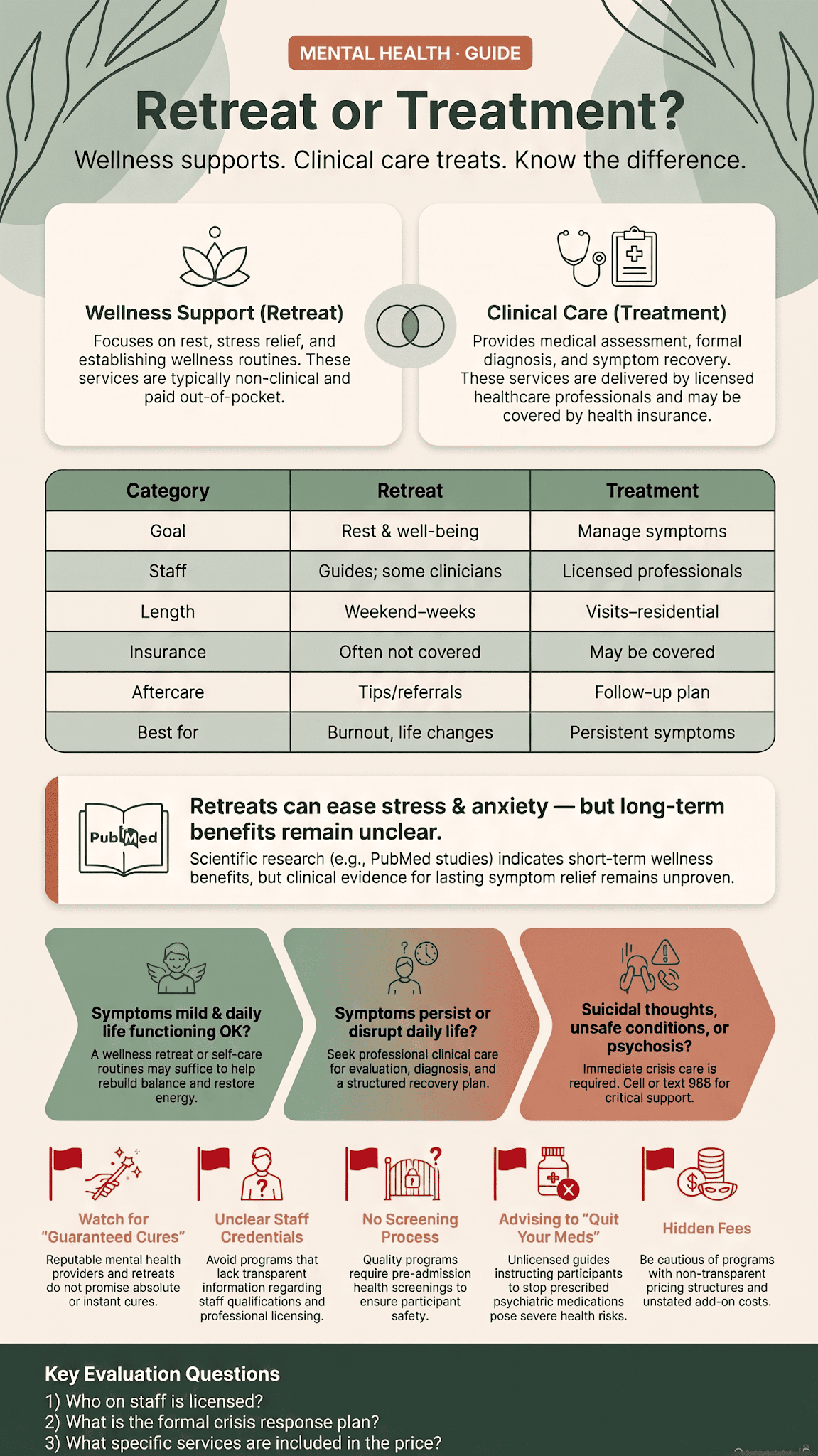
Standard clinical treatment programs center on several essential medical components:
- Assessment: A licensed medical professional conducts a comprehensive evaluation of symptoms, psychiatric history, medical safety, and diagnostic markers. Additional specialized interventions such as brain mapping and neurofeedback may also be evaluated based on the individual’s clinical profile.
- Diagnosis: Qualified clinicians use DSM-5-TR standards to determine formal diagnoses and distinguish between acute situational stress and clinical psychiatric disorders.
- Licensed clinicians: Care is delivered directly by credentialed professionals, including psychiatrists, licensed psychologists, clinical social workers, and addiction specialists.
- Treatment plan: The clinical team develops and continually adjusts a personalized, evidence-based plan integrating individual psychotherapy, psychiatric medication management, group therapy, and structured aftercare.
The National Institute of Mental Health (NIMH) advises seeking professional help when symptoms persist or interfere with sleep, concentration, or daily functioning.
Retreat vs. Treatment Program at a Glance
A wellness retreat primarily supports general well-being, while a clinical treatment program provides assessment and care for mental health conditions. A facility’s name alone doesn’t tell you which one you’re getting.
| Factor | Mental health retreat | Mental health treatment program |
| Main goal | Rest, stress relief, and emotional well-being | Assessment, managing symptoms, and recovery |
| Staff | Wellness guides; some have licensed clinicians | Mental health professionals trained for that type of care |
| Licensing | Depends on the services offered and local laws | Depends on the type of care, the facility, and where it is |
| Typical length | A weekend to a few weeks | One-time visits to long-term residential care |
| Insurance | Activities and lodging are often paid out of pocket | Medically necessary care may be covered |
| Aftercare | May offer self-care tips or referrals | Often includes follow-up visits and a plan for ongoing care |
| Best for | People who want structured rest and help with stress | People who need an evaluation or treatment for symptoms that last |
Some programs combine wellness activities with clinical services, so their specific offerings matter more than their labels. For instance, a retreat with clinical staff might offer individual therapy, while a residential treatment program might also incorporate yoga, outdoor recreation, and meditation. Ultimately, what matters most is the staff’s qualifications, the level of care provided, how safety is handled, and the specific services included.
Appropriate levels of care depend on symptom severity, safety needs, and the degree of clinical support required. Options range from outpatient therapy and intensive outpatient programs (IOP) to partial hospitalization (PHP) and residential treatment. A qualified professional can help determine which level of care best fits an individual’s needs. Before enrolling, request an itemized list of included services, potential additional fees, and exclusions, and confirm the licensing credentials of the treating professionals.
Which One Do You Need?

The most suitable option depends on symptom severity, impact on daily functioning, and safety considerations. While a retreat can support personal well-being, it cannot substitute for clinical care when symptoms persist or interfere with everyday responsibilities.
A Retreat May Be Enough If
A wellness retreat may be suitable when stress is manageable, daily routines remain functional, and formal clinical treatment is not currently required:
- Your stress or workplace burnout has intensified, but you remain able to manage daily obligations.
- You want to establish healthier foundational habits around sleep, movement, and mindfulness.
- You have experienced a bereavement or major life transition and need dedicated space to rest and adjust.
- You are already actively working with an outside therapist who agrees a wellness stay is an appropriate complement.
- The retreat provides transparent pricing, conducts intake wellness screenings, and does not promise medical cures.
Choose a Treatment Program If
The U.S. Food and Drug Administration (FDA) notes that:
“Depression can be treated with medication or counseling, and sometimes both are used.” – FDA
Clinical treatment should be prioritized if:
- Depression, anxiety, panic episodes, or trauma interfere with work, education, self-care, or family relationships. For individuals experiencing persistent mood struggles, understanding the signs of depression and its treatment options clarifies why professional assessment is necessary.
- Your psychological symptoms are continuous, worsening, or unresponsive to rest and self-care.
- Disrupted sleep, appetite changes, or cognitive fatigue severely impair normal daytime functioning.
- Alcohol or substance use has become difficult to manage, or you may be at risk of withdrawal. A healthcare professional can assess whether you need addiction treatment, medical supervision, or another level of care.
- A healthcare provider has recommended a psychiatric evaluation or a higher level of care, such as intensive outpatient treatment (IOP), partial hospitalization (PHP), or residential mental health treatment.
Severe symptoms such as psychosis, inability to maintain personal safety, or thoughts of self-harm require immediate emergency medical care rather than retreat settings. In the United States, call or text 988 for suicide and crisis lifelines, or dial 911 in life-threatening situations.
If you are experiencing alcohol or drug withdrawal, seek medical advice before entering a retreat or attempting to stop substance use independently. Withdrawal from certain substances can be dangerous and typically requires medical supervision. Individuals needing structured support may benefit from clinically appropriate addiction treatment in Colorado Springs.
Red Flags When Choosing a Retreat

A reputable retreat should maintain clear transparency regarding staff qualifications, scope of practice, and safety procedures. Watch for these critical red flags before enrolling:
- Guaranteed cures: Programs claiming they can cure clinical depression, PTSD, or severe anxiety in a short stay.
- Unverified staff credentials: Staff who cannot distinguish between certified wellness coaching and state-licensed psychotherapy.
- Absence of medical screening: Programs that do not evaluate medical history, medications, substance dependence, or psychiatric stability prior to arrival.
- Pressure to stop medical care: Advising guests to stop prescribed psychiatric medications or pause care with outside therapists.
- Lack of emergency protocols: Facilities with no established crisis procedures or partnerships with local hospitals.
- Hidden fee structures: Unclear pricing for private accommodations, supplemental counseling, or cancellation policies.
- Mandatory high-intensity sessions: Forcing participants to engage in emotionally triggering trauma exercises or extreme meditation without opt-out options.
- No continuum of care: Failing to provide aftercare planning or clinical referrals when a guest requires ongoing care.
An attractive setting does not establish a retreat’s effectiveness or clinical suitability. Positive reviews and comfortable facilities do not establish clinical competence, treatment effectiveness, or safety.
Before signing up, inquire about who facilitates the activities, whether licensed clinicians are present, how worsening symptoms are managed, and whether the program coordinates with existing healthcare providers. A responsible program will clearly state its scope of care and willingly address questions regarding staff qualifications, safety protocols, and emergency procedures.
Clinical Care in a Retreat-Style Setting

A tranquil environment can aid reflection, but scenic surroundings alone do not establish a facility’s ability to treat clinical psychiatric disorders. Some programs bridge this gap by offering licensed clinical care, psychiatric evaluations, and evidence-based psychotherapy within comfortable, retreat-style settings.
When evaluating options, always verify clinician licensing, medical oversight, and emergency safety protocols. Insurance coverage depends on the health plan, provider network, medical necessity requirements, and specific services received. Medically necessary mental health treatment may be covered when policy requirements are met, while non-clinical wellness retreats generally require out-of-pocket payment. Contact your insurer to confirm coverage before enrolling.
If symptoms disrupt your daily routine, professional treatment must take precedence over recreational relaxation. Review Compass IR’s available services to determine whether our structured outpatient or day treatment programs align with your clinical needs. Contact Compass IR today to schedule a confidential assessment and identify the right level of care for your recovery.
Choosing a Mental Health Retreat With Confidence
Choosing between a mental health retreat and a clinical treatment program starts with understanding your symptoms and the support you need. A retreat may provide a helpful break from daily stress, but persistent symptoms, impaired daily functioning, or substance-related concerns may require professional care.
Before enrolling, verify staff qualifications, available services, safety protocols, and overall costs. If you are uncertain which option is right for you, contact Compass IR to discuss available services and determine whether a clinical assessment can help clarify your next steps.
FAQs
Does insurance cover a mental health retreat?
Insurance coverage depends directly on whether the program delivers licensed, medically necessary care. Standard health policies often cover diagnostic psychiatric evaluations, licensed psychotherapy, and medical treatment programs. In contrast, wellness retreats centered on meditation, lodging, yoga, and recreational relaxation are considered non-clinical and must be paid out-of-pocket. Always confirm with your insurance carrier whether specific clinical services and providers are in-network prior to enrollment.
Are mental health retreats worth it?
A wellness retreat may help people manage stress, establish healthier routines, or take a break from daily responsibilities. However, it should not replace appropriate clinical care when someone has a mental health condition that affects daily functioning. A qualified professional can help determine whether therapy, medication, or a higher level of care is appropriate.
Is a mental health retreat the same as rehab?
No. A wellness retreat focuses on stress reduction and healthy habits, whereas rehabilitation and addiction treatment programs provide licensed medical interventions, psychiatric evaluations, evidence-based therapies, and medically managed withdrawal support for substance use disorders. Recreational retreat amenities cannot safely replace clinical detoxification or structured addiction programming.
How do I know if I need treatment instead of a retreat?
Professional clinical treatment is the appropriate step if symptoms persist, worsen, or interfere with daily life, work, sleep, and emotional regulation. If you experience severe depressive episodes, panic disorders, escalating substance misuse, or thoughts of self-harm, consult a licensed mental health professional immediately rather than booking a recreational retreat.