

When comparing PHP vs. IOP, the primary distinctions involve weekly treatment hours, clinical intensity, and daily schedule flexibility. A Partial Hospitalization Program (PHP) generally provides 20 or more hours of daytime clinical care each week, while an Intensive Outpatient Program (IOP) typically offers 9 to 19 hours.
Both outpatient levels allow individuals to return home or to supportive recovery housing each evening. However, PHP offers structured day treatment for severe symptoms, whereas IOP gives clients the leeway to balance care with workplace or family obligations. Understanding how these levels of care function helps you choose the right path toward lasting stability.
Key Takeaways
- PHP provides more intensive daytime care, making it a potential fit for people who need frequent clinical support without overnight hospitalization.
- IOP offers structured, part-time treatment, helping clinically stable participants practice recovery skills while maintaining work, school, or family responsibilities.
- The right level of care depends on clinical need, safety, medical stability, treatment history, and the support available outside the program.
What Is a Partial Hospitalization Program (PHP)?
A Partial Hospitalization Program (PHP) is for people who need more than a weekly therapy appointment but do not necessarily need to stay in a hospital. Treatment takes place during the day, often on four or five weekdays. Participants return home after their sessions, provided their living arrangements are safe and suitable for outpatient care.
The program usually brings several types of support together. Depending on the facility, a person may meet with a psychiatrist, attend group therapy, work one-on-one with a therapist, or receive help managing medication.
The care team reviews progress and can adjust the plan when a person’s needs change. Treatment structures vary by provider, and some PHP and IOP treatment programs also incorporate medical support and ongoing recovery planning.
A PHP program generally includes:
- Hours: Around 20 or more hours per week, although schedules vary between providers.
- Setting: A hospital-affiliated or community-based treatment center, with no routine overnight stay.
- Who it’s for: People with significant mental health or substance use symptoms who need frequent support during the day. PHP may also be an option after inpatient or residential treatment when a person is ready to return home.
Consider someone who has been struggling with severe depression. They may find it difficult to manage daily tasks, attend appointments, and cope with symptoms without regular help. A PHP can provide a more structured routine, frequent therapeutic contact, and medication reviews when needed.
There is an important limit, though. PHP does not provide care around the clock. Someone who cannot remain safe outside treatment hours, is experiencing dangerous withdrawal, or needs urgent medical attention may require hospital care instead.
What Is an Intensive Outpatient Program (IOP)?

An Intensive Outpatient Program (IOP) offers regular treatment without taking up as much of the week as PHP. It is often used by people who need consistent support but can manage their daily activities between sessions.
Treatment may involve group counselling, individual therapy, family sessions, and practical exercises for managing symptoms. Depending on the provider, therapy and treatment services may also include approaches such as trauma-focused therapy and other supportive interventions.
Programs vary, but some work with people experiencing depression, anxiety, trauma-related symptoms, substance use disorders, or a combination of these concerns.
The schedule can make a real difference for someone trying to keep up with everyday responsibilities. Some providers offer evening sessions, while others operate during the day. Participants may be able to continue working or studying, depending on the hours required and how their symptoms affect them.
An IOP program may include:
- Hours: Around 9 to 19 hours per week for adults, depending on program standards and clinical needs.
- Schedule: Often three to five days per week, with sessions lasting several hours.
- Therapy: Group counseling, individual sessions, family involvement, and approaches such as cognitive behavioral therapy (CBT) or dialectical behavior therapy (DBT).
- Recovery support: Help with coping skills, relapse prevention, and recognising situations that could make recovery more difficult.
- Clinical oversight: Psychiatric appointments, medication reviews, and case management when these services are available.
For someone recovering from alcohol use disorder, an evening IOP might make it possible to attend treatment after work. The person can then practise the skills discussed in therapy in everyday situations and bring questions or difficulties back to the next session.
That arrangement only works when the person can manage safely between appointments. IOP is not intended to replace medical care for potentially dangerous withdrawal, and a change in symptoms may mean that a different level of treatment is needed.
PHP vs. IOP at a Glance
The difference between PHP and IOP is not simply the number of hours spent in treatment. PHP generally offers more frequent clinical contact and a fuller daytime schedule. IOP leaves more room for daily responsibilities, provided the person is stable enough to manage outside the program.
“Intensive outpatient programs are an important part of the continuum of care for substance use disorders.” – McCarty et al., Psychiatric Services (2014)
| Feature | PHP | IOP |
| Hours per week | Around 20 or more | Around 9-19 |
| Days per week | Often 4-5 | Often 3-5 |
| Typical length | Often 2-8 weeks | Often 1-12 weeks |
| Medical support | More frequent clinical contact, depending on available services | Monitoring based on individual needs and program resources |
| Work or school | Daytime attendance can make regular commitments difficult | Often easier to fit around work or school |
| Best for | People who need intensive daytime treatment and closer support | People who can manage safely between sessions but need regular treatment |
These figures are useful for comparing programs, but they should not be treated as fixed rules. One provider may offer a different schedule from another. Treatment length also depends on clinical progress, admission criteria, insurance requirements, and the person’s circumstances.
For substance use treatment, the American Society of Addiction Medicine (ASAM) identifies Level 2.5 as partial hospitalization and Level 2.1 as intensive outpatient treatment within its level-of-care framework. The purpose is to help clinicians choose a suitable intensity of care based on a person’s needs, rather than making that decision from a diagnosis alone.
The Centers for Medicare & Medicaid Services’ guidance on Medicaid substance use disorder services provides further background on outpatient services and program requirements. Eligibility and insurance coverage depend on the applicable state rules and the person’s policy.
How to Choose the Right Level of Care

A person may need intensive treatment at one point and manage well with fewer appointments later. That is why the choice between PHP and IOP should follow a clinical assessment, not just a preference for a particular schedule.
The clinician will want to understand what daily life looks like, what has or has not helped in the past, and whether the person can stay safe between sessions. Important considerations include:
- Symptom severity: Whether depression, anxiety, trauma-related distress, or substance use is interfering with work, relationships, sleep, or other daily activities.
- Safety: Whether the person can manage safely outside treatment hours or needs closer supervision.
- Medical needs: Whether withdrawal monitoring, medication changes, or frequent psychiatric assessments are necessary.
- Home environment: Whether the person has a stable place to live and suitable support during recovery.
- Treatment history: Whether previous treatment has helped or symptoms have continued despite consistent care.
- Daily responsibilities: Whether the required sessions can fit around work, school, or caregiving without making treatment difficult to maintain.
Some behavioral health providers use the Level of Care Utilization System (LOCUS) to assess psychiatric treatment needs. For substance use disorders, ASAM criteria consider areas such as withdrawal risk, physical health, emotional and behavioral needs, and the recovery environment.
These frameworks help organise the assessment. They do not replace clinical judgement, and the recommendation may change as the person’s condition improves or worsens.
“Step-down programs can help to facilitate safe discharges and decrease the likelihood of hospital readmissions.” – Gautam et al., Journal of the American Academy of Child & Adolescent Psychiatry (2024)
Signs PHP Is the Better Fit
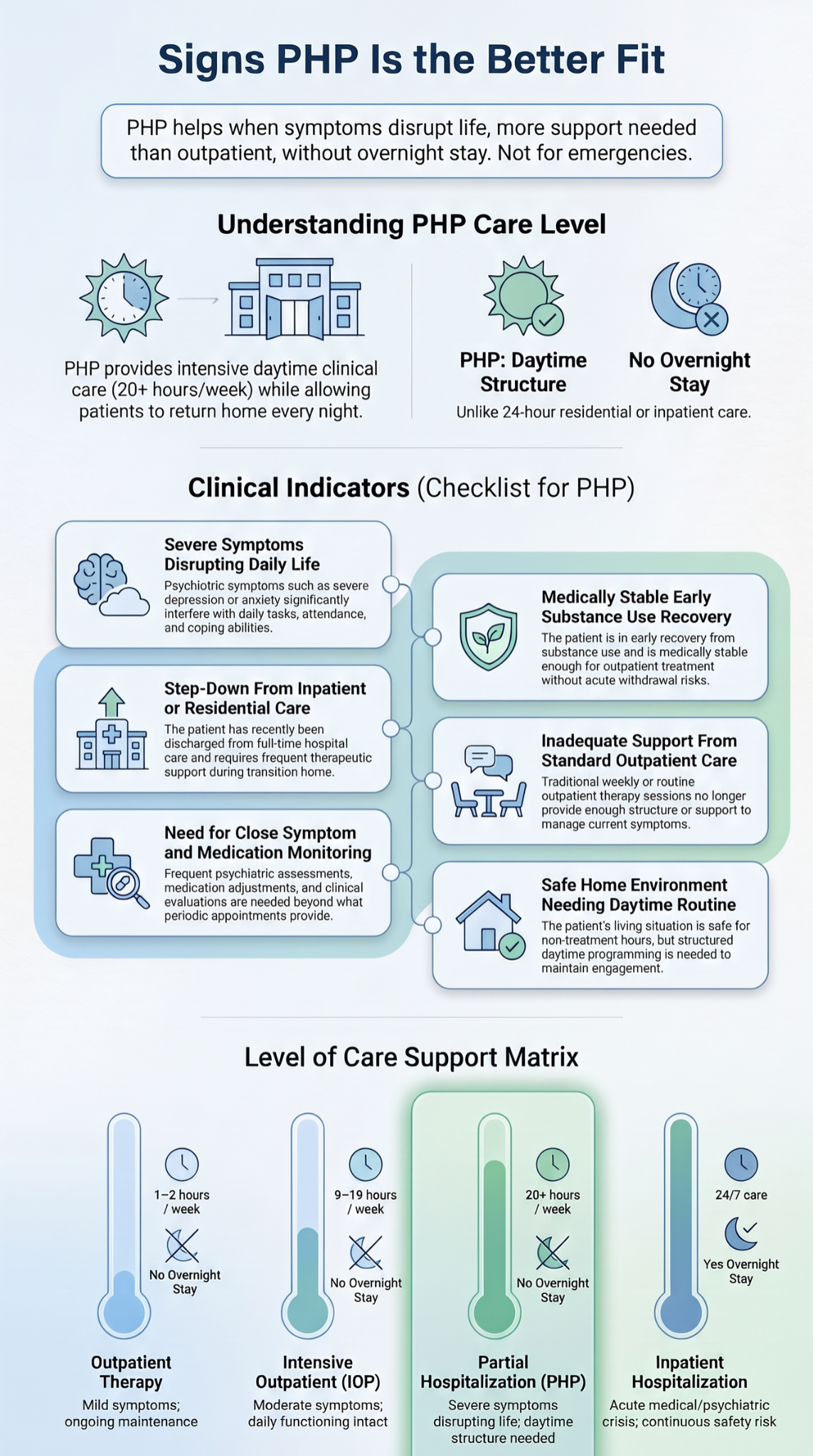
PHP may be appropriate when symptoms are interfering significantly with daily life and weekly therapy does not provide enough support. It offers a more structured daytime routine without the overnight stay required in inpatient care.
The concerns addressed in treatment can include depression, anxiety, trauma, and substance use disorders, although the appropriate level of care depends on each person’s clinical needs and safety.
A clinician may consider PHP when:
- Depression, anxiety, or other psychiatric symptoms have become severe enough to disrupt ordinary activities.
- The person has recently left inpatient or residential treatment and still needs frequent therapeutic support.
- Medication changes or psychiatric symptoms require closer review than an IOP can provide.
- The person is in early recovery from substance use and has been assessed as medically stable enough for outpatient treatment.
- Standard outpatient therapy has not provided enough support to manage the person’s current symptoms.
- The home environment is reasonably safe, but a structured daytime program may help the person stay engaged in treatment.
For example, someone returning home after an inpatient psychiatric stay may still struggle to manage symptoms without regular contact with a care team. PHP can provide time for therapy, progress reviews, and medication follow-up while the person works towards managing more of their routine independently.
PHP is not the right setting for every serious situation. A person experiencing dangerous withdrawal, an immediate risk of suicide, or another acute medical or psychiatric emergency may need emergency assessment or inpatient treatment.
Signs IOP May Be Enough
IOP may be a reasonable choice when a person needs regular treatment but can manage safely for the hours and days they are not attending sessions.
It may be suitable when the person:
- Has symptoms that are stable enough for part-time treatment.
- Can follow a safety plan and seek help if their condition gets worse.
- Has a reasonably stable home environment or another suitable recovery arrangement.
- Needs more consistent support than weekly therapy provides.
- Wants to continue working, studying, or caring for family while receiving treatment.
- Can practise coping skills, emotional regulation, and relapse prevention outside scheduled sessions.
Take the example of someone receiving treatment for alcohol use disorder. After an appropriate medical assessment, the person may be able to attend IOP while continuing to work and live at home. Group counselling and individual therapy can help them recognise triggers and plan how to respond to difficult situations.
The deciding factor is not whether the person prefers a flexible schedule. They must be able to manage safely between appointments. If substance use escalates, symptoms become harder to control, or daily functioning declines, the care team may recommend PHP or another level of care.
Stepping Down From PHP to IOP

Some people move from PHP to IOP once they no longer need the same amount of daily support. The change usually follows a review of their symptoms, progress in treatment, and ability to manage life outside the program. There is no single timeline that works for everyone.
A typical care path may look like this:
- Initial assessment: A clinician reviews symptoms, substance use, medical needs, safety, treatment history, and support at home.
- PHP treatment: The person attends structured daytime sessions when frequent clinical support is needed.
- Progress review: The team checks whether symptoms are improving and whether the person can use coping skills outside treatment.
- Transition to IOP: If appropriate, the person moves to fewer weekly treatment hours while continuing therapy and other necessary care.
- Ongoing outpatient care: Further progress may allow a move to weekly therapy, medication follow-up, peer support, or other continuing services.
Some people need more time in PHP. Others may need a higher level of care if their condition changes. The purpose of reviewing progress is to make sure the treatment plan continues to match the person’s needs.
Find the Right Program at Compass
Navigating mental health recovery or substance use challenges requires a treatment environment tailored to your clinical needs and daily schedule. Whether you require the structured daily intensity of a day program or the flexibility of evening outpatient care, choosing the right level of support is essential for lasting healing.
Compass IR provides evidence-based Partial Hospitalization Programs (PHP) and Intensive Outpatient Programs (IOP) that blend clinical psychotherapy, psychiatric oversight, functional wellness, and holistic therapies. Our clinical team helps you determine the appropriate level of care through a comprehensive, confidential intake evaluation. Reach out to Compass IR today to verify your insurance benefits and begin your personalized treatment plan.
FAQs
Can you work while in PHP or IOP?
IOP is specifically designed to accommodate everyday responsibilities, offering part-day or evening sessions that allow many clients to continue working or attending school. In contrast, PHP operates as a comprehensive day program requiring 20 or more hours per week, making full-time employment during treatment challenging.
How long do PHP and IOP usually last?
PHP typically lasts between 2 to 8 weeks, whereas IOP generally spans 8 to 12 weeks. Actual treatment duration varies based on individual clinical progress, symptom stabilization, and ongoing medical necessity assessments.
Does insurance cover PHP and IOP?
Most major commercial insurance plans provide coverage for both PHP and IOP when criteria for clinical medical necessity are met. Coverage levels, copays, and deductible requirements depend on your specific policy and network status, so completing an insurance benefits check before admission is recommended.
Can you start in IOP without doing PHP first?
Yes. An individual does not need to complete a PHP before enrolling in an IOP. A clinician may recommend starting directly in an IOP if an initial clinical assessment confirms the client is medically stable, has a safe living environment, and does not require daily daytime monitoring.